Between Worlds:
An Arab Jewish Group Healing Process
A 6-week group for Arab Jews exploring identity, ancestry, belonging, and healing.
Led by Shelly Elia-Shalev & Hadar Cohen
October 8 - November 12
Thursdays, 10 am - 11:30 AM PST
6 Weeks, 90 minutes weekly
Cost: $500
What happens when the stories you've inherited about who you are don't quite fit?
When you carry Jewishness and Arabness, belonging and displacement, pride and grief, memory and silence?
When parts of your history have been forgotten, silenced, or made to feel as though they contradict one another?
Between Worlds is a space to explore what you've inherited and discover what you want to carry forward.
Together, we'll make space for the complexity of Arab Jewish identity, reconnect with cultural and ancestral memory, and explore what healing might look like when we no longer have to choose between the different parts of ourselves.
Apply HereYou might have grown up with parts of your identity that didn't have a place to speak.
Maybe your family stopped speaking Arabic.
Maybe certain stories weren't told.
Maybe you were taught to understand your Jewishness through a framework that didn't reflect your family's history.
Maybe you feel deeply connected to Arab culture but don't know how to name that relationship.
Maybe you've spent years moving between worlds—and you're tired of feeling like you have to choose.
Maybe you simply feel that something has been lost.
This group begins there.
A space for remembering, grieving, questioning, and reclaiming.
Over six weeks, we'll explore the psychological and spiritual dimensions of Arab Jewish identity.
Together we'll look at:
- family histories and ancestral memory
- Arabness, Jewishness, and the identities between them
- migration, displacement, and belonging
- cultural loss and inherited silence
- Zionism, Palestine, and the stories we've inherited
- language, food, ritual, music, and other forms of cultural memory
- Islam and the shared cultural worlds of Jews and Muslims
- what it means to reclaim an identity without romanticizing the past
This is an intimate 6-week healing process group for people exploring Levantine, Mizrahi, and Arab Jewish identity through embodiment, memory, and lived experience.
The group explores themes of identity and belonging, Judaism, Zionism and homeland, Islam, Orientalism, connection to Middle East and North Africa, and ancestral and generational healing.
We offer a political and healing-oriented space that holds complexity without forcing resolution. We will talk on what it means to live between worlds—emotionally, culturally, and historically—and on what has been fragmented, inherited, or silenced with presence and care.
This is a small, contained group designed for depth, reflection, and relational process. Together, we aim to create space for remembering, processing, and reclaiming identity within a shared Levantine experience between East and West.
Who is it for?
We welcome you if you identify as Mizrahi, Sephardi, Arab Jews, Kurdish, Persian, Amizgh - we know this identity is complex and multilayered. We invite expansive understandings of what it means to be a MENA Jew.
Shelly and Hadar born and raised in Israel/Palestine, currently living in the United States. They both identify as Arab Jews and are committed to Palestine liberation.
What We’ll Explore Together
Session 1: Identity & Belonging
Who we are beyond fixed labels and inherited categories. We will explore fragmentation, multiplicity, and the experience of holding more than one cultural, religious, or national identity at once. We look at how we name ourselves, how others name us, and where we feel seen or unseen. This is a space to begin locating ourselves without needing to resolve contradictions.
Session 2: Family, Trauma & Ancestry
The emotional and relational patterns we inherit through family lines—spoken and unspoken. We explore silence, rupture, survival strategies, displacement, and the ways our histories live in the body and nervous system. This includes grief for what was lost or never fully known, and curiosity about what has been carried forward unconsciously across generations.
Session 3: Zionism, Palestine & Homeland
Where do we fit in politically? We have been squashed into narratives of Holocaust and Nakba and while these atrocities are related to us, they are not fully our political story. What does it mean to understand our political reality in these times? What is our homeland and what stories have been told to us about our homelands? How do we understand our homelands outside of Zionism? We will allow space to reflect on the false narrative of Zionism that has been fed to us - a European dream that has uprooted us from our homes.
Session 4: Orientalism
An exploration of how Arabness, “the East,” and Middle Eastern identity have been imagined, framed, or distorted through external cultural and historical narratives. We examine how these representations shape internal identity, belonging, and self-perception. This includes the experience of being seen through a gaze that simplifies, exoticizes, or dislocates, and how that becomes internalized or resisted.
Session 5: Jewishness & Ashkenazi Assimilation
Home, ritual, spirituality, distance, intimacy, and inherited Jewish life. We explore what it means to inherit Jewishness through family and cultural traditions that may have been transformed, abandoned, or reshaped through migration and assimilation. We look at the ways Ashkenazi Jewish culture and narratives have come to define mainstream understandings of Jewish life, and what happens to the histories, practices, languages, and identities of Jews from the Arab and Muslim worlds within that landscape. We explore our own relationships to Jewishness, including what feels intimate and familiar, what feels foreign or imposed, and what it might mean to reclaim Jewish life on our own terms.
Session 6: Islam
Islam as part of the cultural environment, shared Middle Eastern life, family history, proximity, and association—not theology or debate. We explore the ways Islam has been present in the worlds our families came from: in language, music, food, customs, architecture, spirituality, friendship, neighborhood, and everyday life. We consider what it means to inherit a Jewish identity that was shaped alongside Muslim communities, and how those histories have been remembered, forgotten, romanticized, or made into oppositional narratives. We create space to encounter Islam not only as an abstract religion, but as part of a shared cultural and historical landscape, and to ask what becomes possible when we allow these entangled histories to be part of our inheritance.
Listen To Podcast with Hadar and Shelly
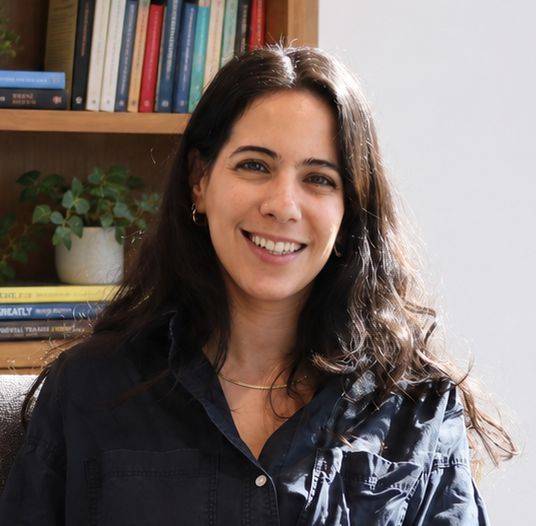
Shelly Elia-Shalev
Shelly Elia-Shalev (she/her) is a Mizrahi Arab-Jew, born and raised in Israel/Palestine, who has lived in the United States since 2018. She is a psychotherapist specializing in complex trauma, attachment wounds, and the psychological impact of multicultural and migration experiences in both individuals and couples. Shelly's goal is to help people reconnect with their inner truth, intuition, and capacity for authentic self-expression.
Before moving to the United States, Shelly was active in the Mizrahi left, where she explored the multilayered and often contradictory narratives that shaped her own identity and the history of her Iraqi Jewish family. This commitment to examining silenced and marginalized histories also informed her ethnographic research, which focused on the stories, memories, and lived experiences of Mizrahi immigrants from North Africa to Israel/Palestine.
Shelly's lifelong project as a researcher, activist, and therapist has been to explore narratives, intuitions, and knowledge that fall outside dominant frameworks of legitimacy. Drawing from oral history, somatic approaches, and non-Western traditions of knowing, she is interested in how embodied experience, ancestral memory, and personal narrative can reveal truths that are frequently overlooked, dismissed, or difficult to measure through conventional research methods. Across her work, she seeks to create space for silenced stories and ways of knowing to be recognized, validated, and integrated.
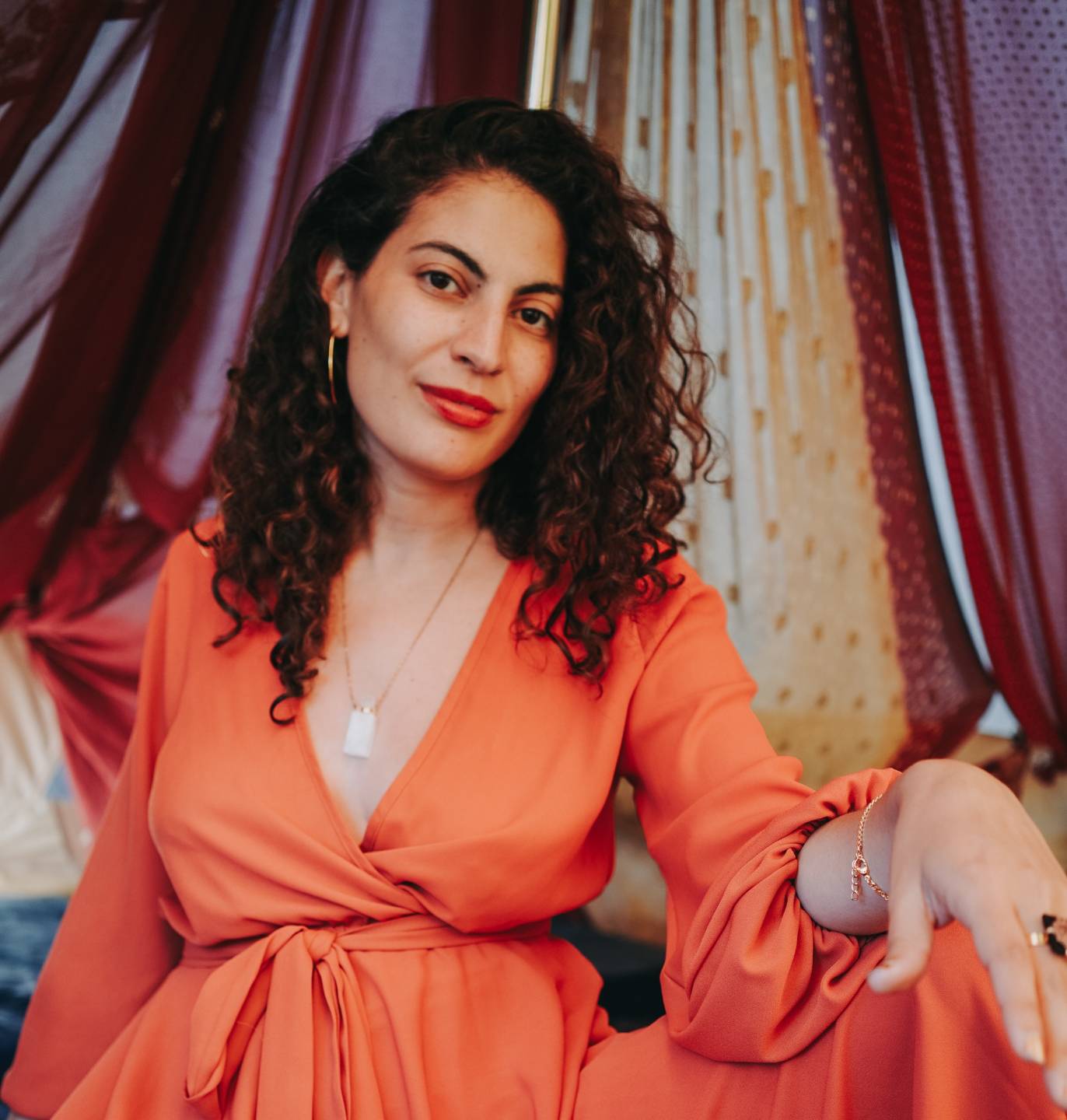
Hadar Cohen
Hadar Cohen is an Arab Jewish scholar, mystic, and artist devoted to spiritual liberation through self-knowledge, relational weaving, and direct experience of God. She is a 10th-generation Jerusalemite with lineage roots also in Syria, Kurdistan, Iraq, and Iran, currently based in Brooklyn, New York.
She teaches through Malchut, her global multi-religious mystical school, offering Jewish mysticism, embodiment, psychology, healing, and contemplative practice. Her core offering is God Fellowship, a twelve-week journey into cultivating a direct relationship with Spirit. Malchut is also home to her Jewish Mystical School, which includes a library of recorded classes and a weekly Hebrew Bible study.
She is dedicated to the theological, political, and cultural revival of the Andalusian tradition through writing, research, and annual retreats in Andalusia, Spain. She was the inaugural fellow at Abrahamic House, a multifaith social change incubator.
She teaches internationally through workshops, retreats, universities, and organizations, and works with individuals both one-on-one and in groups. She also consults for media, television, and publishing projects.
Her podcast, Hadar's Web, features conversations with community members on spirituality, healing, justice, and art. She offers free meditations at Insight Timer. Subscribe to her Substack for ongoing writing, teachings, and offerings.